
Research Background and Objectives
Various types of mobile platforms are rapidly moving toward electrification, intelligence, and low-carbon development. Their energy systems need to meet not only range and power requirements, but also battery lifetime, safety risks, travel demand, operating costs, and real-time control capabilities.
Target Platforms
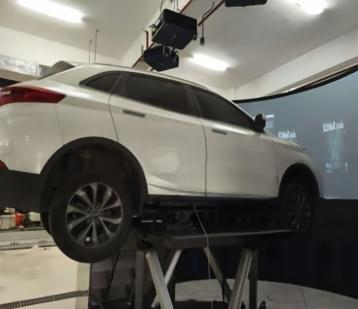
Ground Vehicles
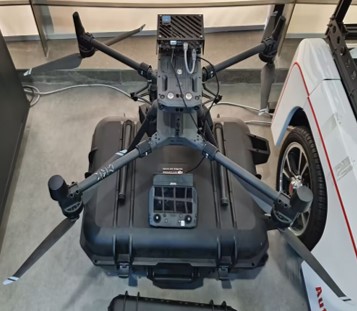
Aerial Vehicles
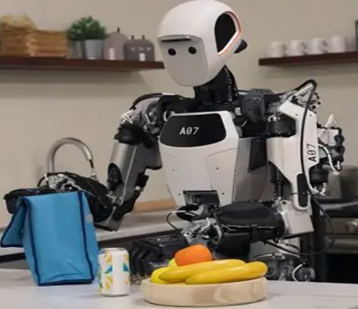
Embodied Intelligent Systems
Research Content
1. Advanced artificial intelligence algorithms: Develop multi-objective optimization models that integrate battery lifetime, travel demand, and cost.
2. Cloud–edge collaborative intelligent management system: Integrate artificial intelligence models and algorithms to enable cloud–edge collaborative management.
3. Lightweight model deployment technologies: Combine model distillation and pruning techniques to achieve lightweight engineering deployment.
Application Scenarios
This research can be applied to power battery lifetime prediction, battery safety early warning, driving range prediction and optimization, intelligent charging strategy optimization, embodied intelligence energy management, and unmanned aerial vehicle energy management.
Research Achievements
Jing H, Ou S*, Lv Z, et al. Battery Safety: Mechanisms, Monitoring, and Machine Intelligence[J]. Advanced Energy Materials, 2026. JCR, Q1, IF 24.4.
Lv Z, Ou S*, Jing H, et al. Self-supervised learning for electric vehicle battery remaining useful life prediction using real-world unlabeled data[J]. Energy, 2026. JCR, Q1, IF 9.0
Qi H, Ou S*, Jia Y H, et al. Cross-temporal framework for driving behavior impact on electric vehicle battery health[J]. Communications in Transportation Research, 2026. JCR Q1, IF 14.5
Jing H, Hu J, Ou S*, et al. A data-driven and physics-based model for assessing real-world usage behavior impacts on electric vehicle battery life[J]. Journal of Energy Storage, 2026, JCR Q1, IF 9.8