Collaboration Background
The global transition of transportation energy involves complex pathways. Alternative fuels, electrification technologies, and carbon emission assessments are jointly influenced by policies, infrastructure, and market acceptance. Traditional methods make it difficult to conduct quantitative comparisons across markets and sectors, and provide limited support for long-term low-carbon decision-making.
Solutions
1. AI-based transportation energy forecasting model: Integrates multi-source big data, discrete choice modeling, optimization algorithms, and large models to forecast transportation energy consumption, technology penetration, and carbon emissions.
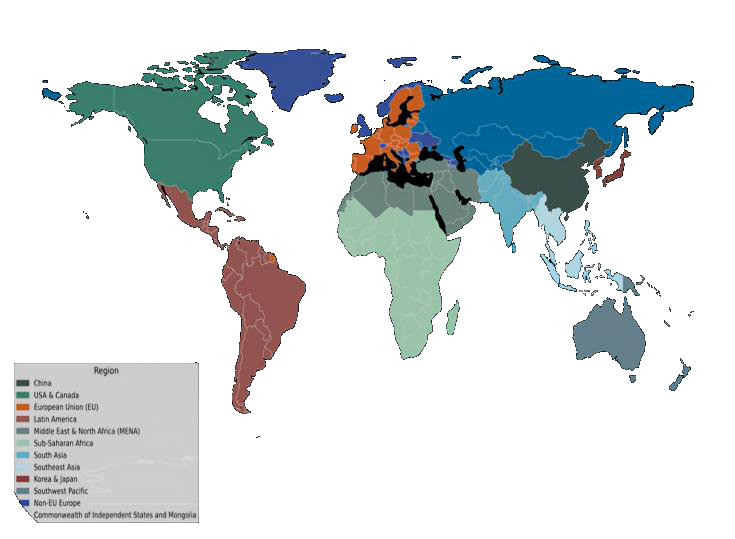
2. Multi-market scenario assessment: Covers regions such as China, Europe, the United States, and the Middle East, as well as transportation modes including road, aviation, and waterborne transport. It outputs market share, energy demand, carbon emissions, and cost results to support policy and industry decision-making.
Multi-region, multi-mode, multi-vehicle, and multi-scenario analysis
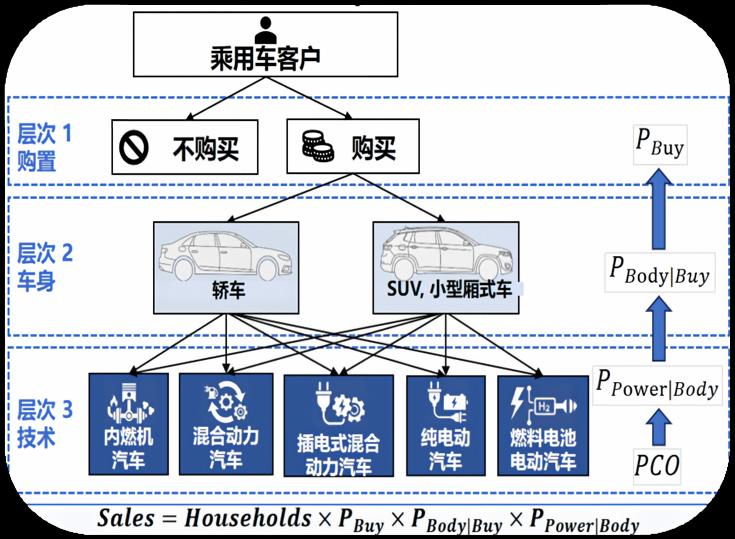
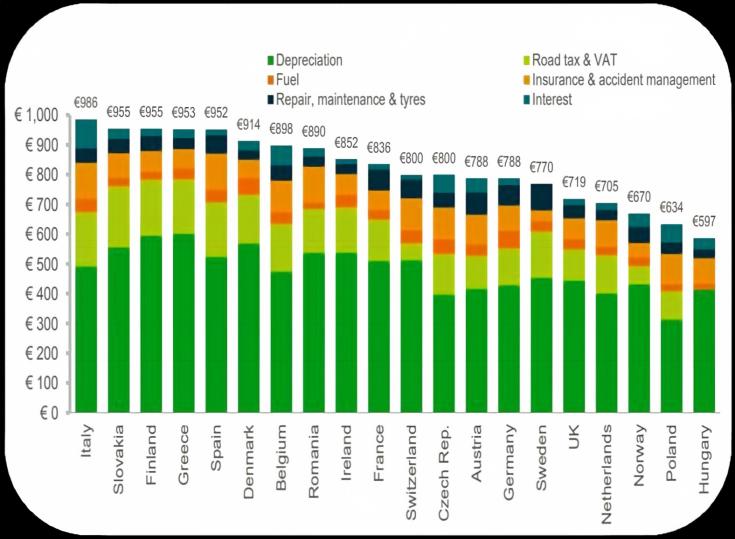
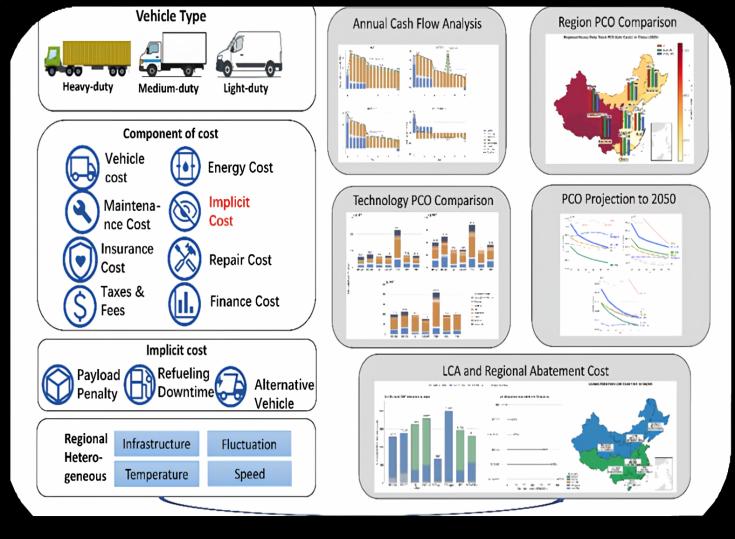
Web-Based Decision Support Tool
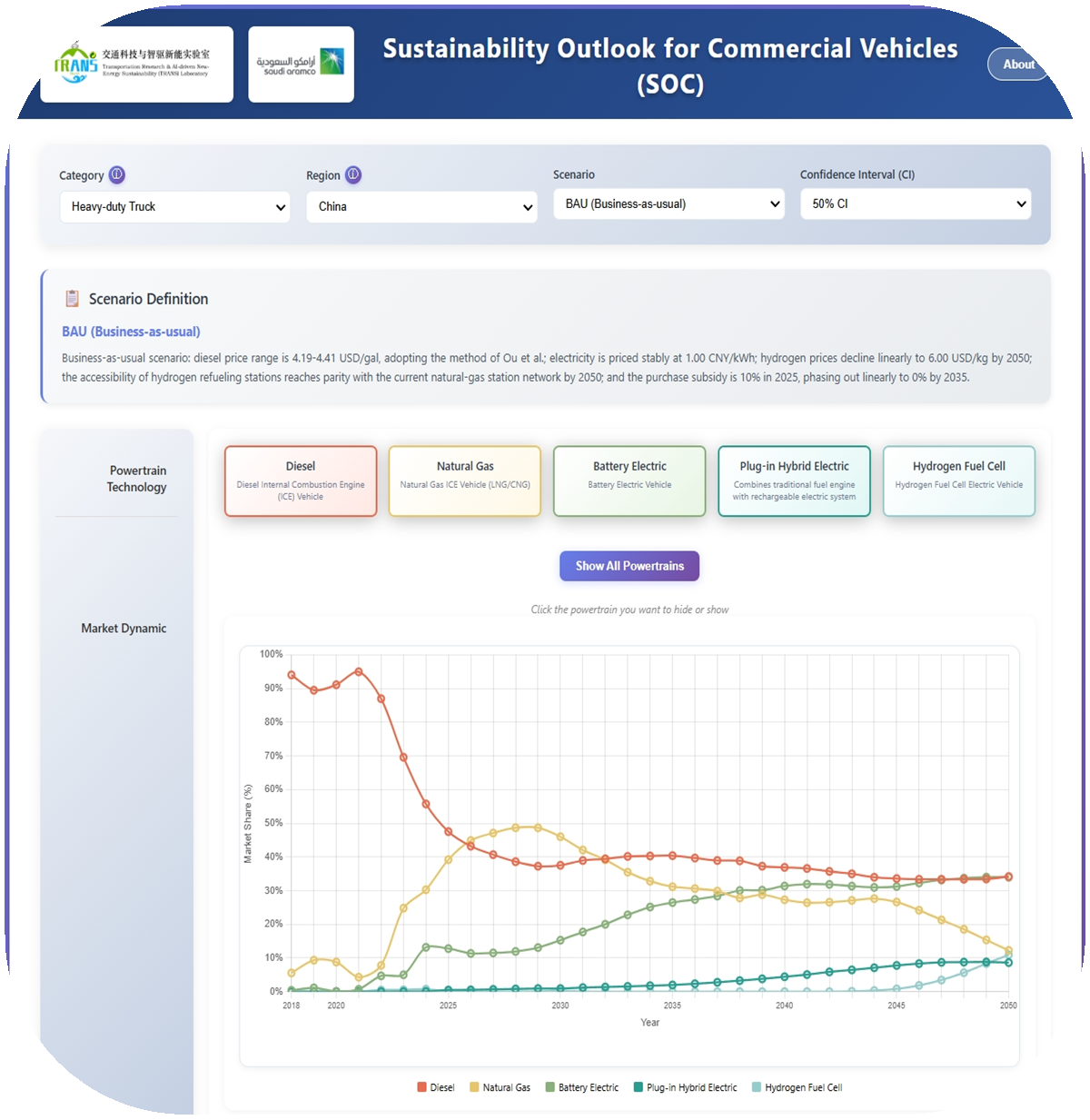
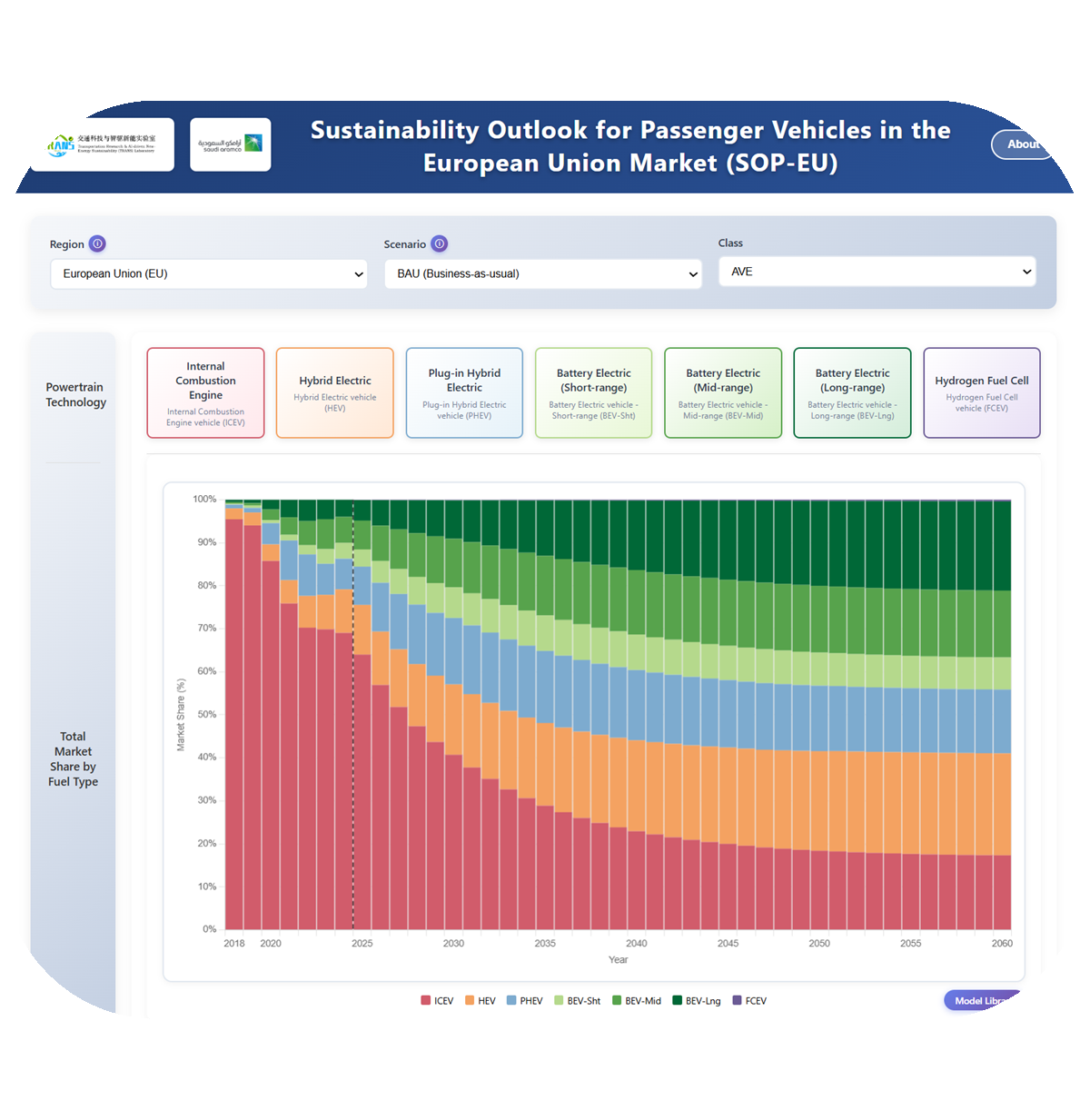
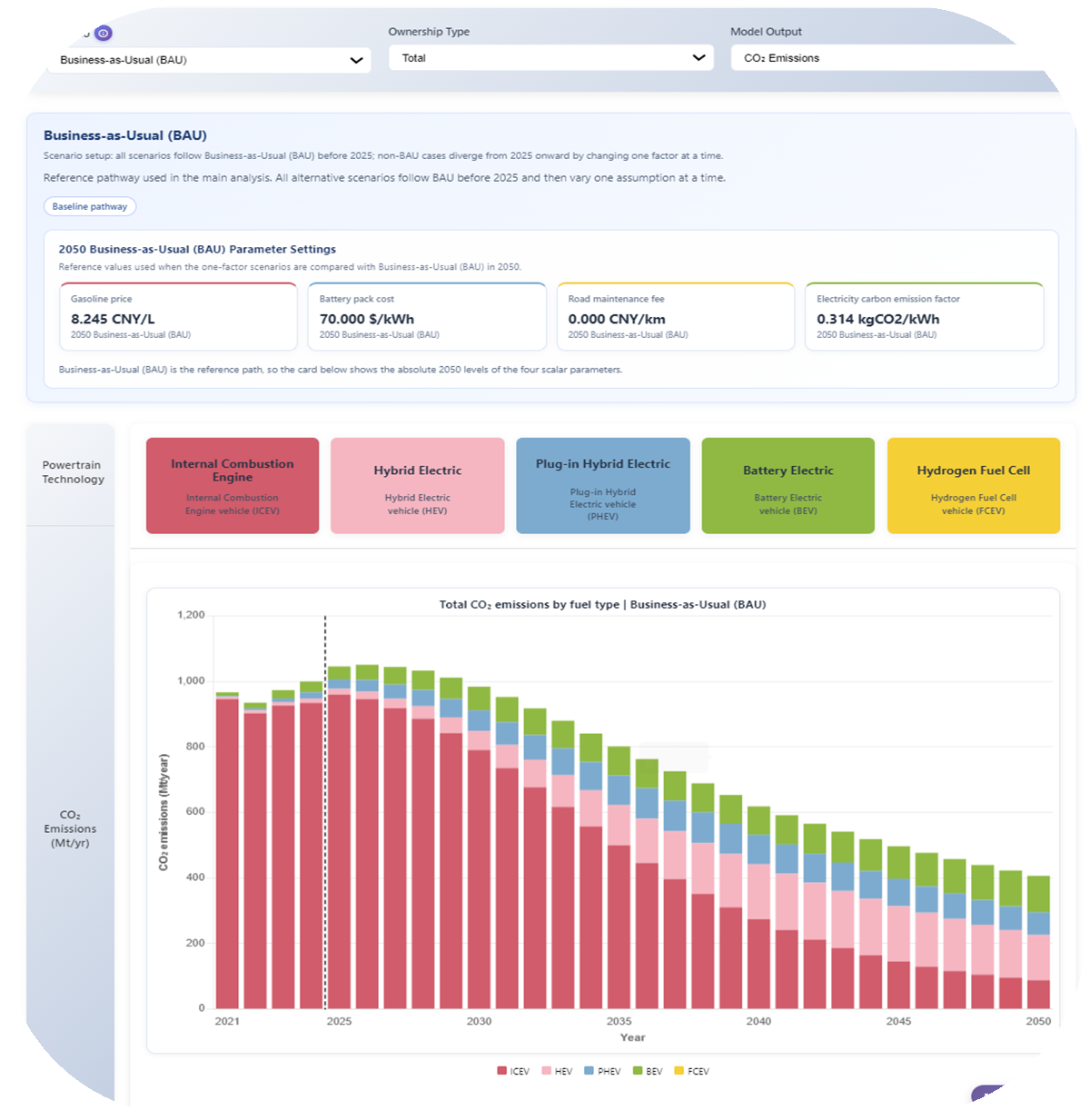
Selected as a United Nations “South-South Cooperation” excellent case