

Lecture Information
【Speakers】
Associate Professor Song Wang
【Moderator】
Professor Shiqi Shawn Ou
【Presentation Title】
Toward Safe and Trustworthy Connected and Automated Driving: Human–Machine Shared Driving and Risk-Aware Intervention
【Date and Venue】
Date: April 10, 2026, 10:00-11:00
Venue: B1-c101
Expert Introduction
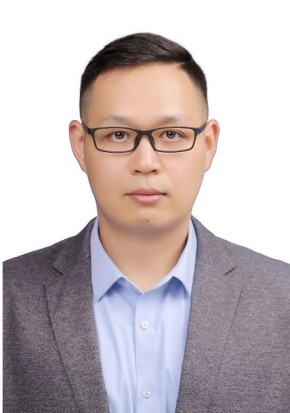
Biography: Dr. Song Wang is an Associate Professor at the School of Traffic and Transportation, Chongqing Jiaotong University. He serves as both a Doctoral and Master’s Supervisor and was selected for the Chongqing Support Program for Innovation Talents of Overseas Returnees. In recent years, Dr. Wang has led numerous national and provincial research projects, including the National Natural Science Foundation of China (NSFC), the China Postdoctoral Science Foundation, and the Chongqing Natural Science Foundation Innovation and Development Joint Fund. His research focuses on intelligent driving and traffic safety. He has published over 20 papers in leading international journals in the field of transportation, including 9 papers in CAS Tier-1 TOP journals. His work is featured in prestigious journals such as IEEE Transactions on Intelligent Transportation Systems, Transportation Research Part A/C/F, Accident Analysis & Prevention, and Transport Policy. His current research interests include human-machine co-driving, autonomous driving safety and risk control, motion-capture-enabled intelligent cockpits, embodied AI, and the integration of Large Language Models (LLMs) with driving intelligence.
Abstract of the Presentations
Presentation Title: Toward Safe and Trustworthy Connected and Automated Driving: Human–Machine Shared Driving and Risk-Aware Intervention
Abstract:This talk focuses on safety and interaction issues in connected and automated driving, and presents the speaker’s recent research progress in three areas: the evolution of public acceptance, risk-aware human–machine shared driving, and safety intervention in typical high-risk scenarios. Existing studies show that public acceptance of automated driving is jointly shaped by safety perception, educational intervention, and user experience, and follows a clear dynamic evolution pattern. At the level of human–machine shared driving, this research addresses key issues such as takeover, distraction, and conflict exposure, and has developed quantitative risk assessment models, non-intrusive prediction methods, and proactive intervention control frameworks. In typical high-risk traffic scenarios, including mountainous curves and yellow-light dilemma zones, continuous guidance warning strategies, automatic speed-control interventions, and dynamic optimization methods under driving uncertainty have also been proposed. Building on these efforts, the talk will further discuss emerging challenges and future directions in human–machine collaboration, risk-aware safety control, and testing and evaluation, as automated driving advances from functional capability toward safe and trustworthy deployment.