


A latest study from the Transportation Energy Modeling Comparison Research (EMF-37) organized by the Stanford University Energy Modeling Forum (EMF) indicates that the transportation sector plays a crucial role in achieving the U.S. 2050 nationwide net-zero emissions goal. Entitled Transportation in Net-Zero Emissions Futures: Insights from the EMF-37 Model Intercomparison Study, the research was published in the journal Energy and Climate Change in 2025 (DOI: https://doi.org/10.1016/j.egycc.2025.100211).
The study was jointly completed by more than 30 experts and scholars from 17 research institutions in the United States, China, South Korea, and Canada, including the National Renewable Energy Laboratory (NREL), Electric Power Research Institute (EPRI), U.S. Environmental Protection Agency (EPA), University of Tennessee, Knoxville (UTK), U.S. Department of Energy (DOE), South China University of Technology (SCUT), Pacific Northwest National Laboratory (PNNL), Stanford University, HEC Montréal (Canada), and Korea Advanced Institute of Science and Technology (KAIST). Professor Shiqi Ou from the TRANS research group at South China University of Technology is one of the co-authors. Integrating simulation results from 12 different economic-energy-environment models, the study systematically analyzes the emission reduction potential, energy structure transformation, and policy intervention effects of the transportation sector under various net-zero pathways.
I. Research Background and Urgency
Transportation is the largest source of carbon dioxide emissions in the United States, accounting for 35% of total emissions. Although emissions dropped briefly during the 2020 pandemic, they have since rebounded to near pre-pandemic levels as the economy recovered. Achieving the 2050 net-zero goal requires the industry to complete deep decarbonization within three decades. However, its complexity lies in involving multiple means of transportation, energy infrastructure, and behavioral patterns, especially in “hard-to-abate” areas such as aviation and maritime transport, where mature alternative technologies are lacking.
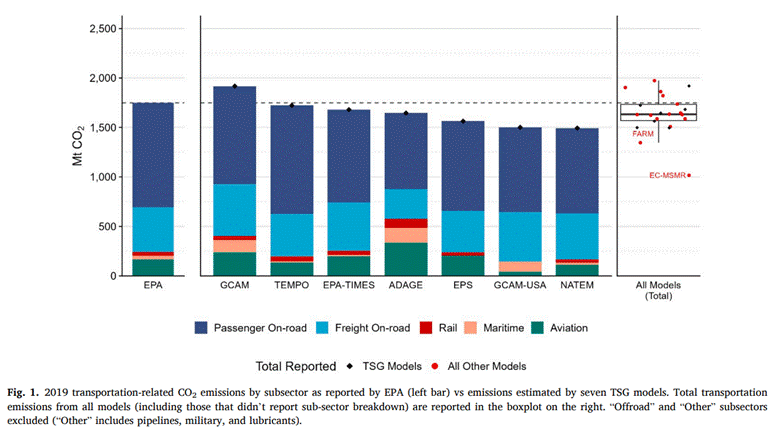
II. Core Findings: Transportation Decarbonization Pathways and Uncertainties
- Technological substitution as the dominant emission reduction strategy
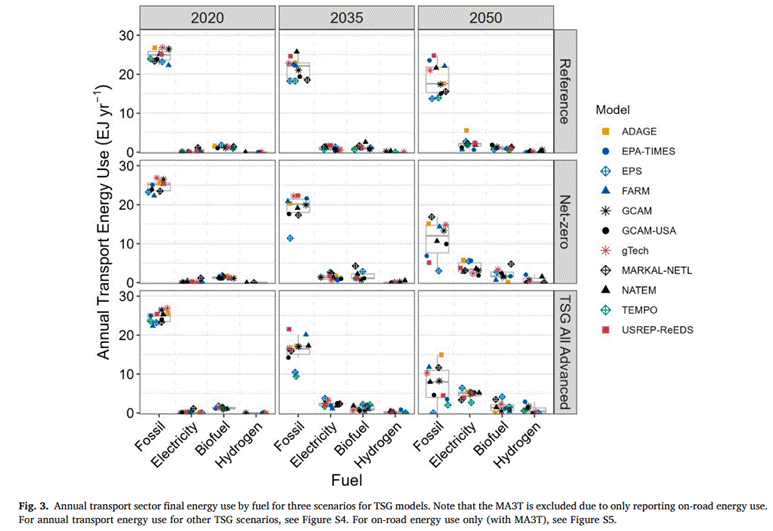
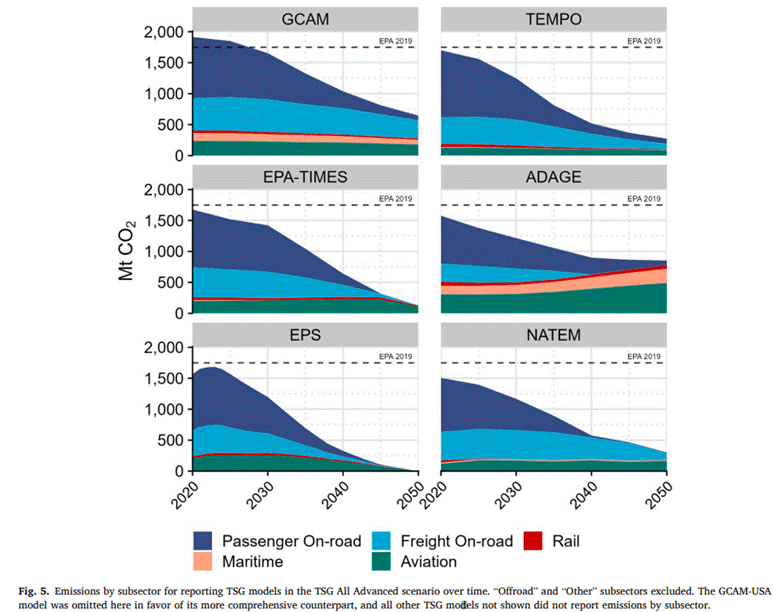
All models consistently show that the passenger vehicle sector will achieve decarbonization primarily through electrification. By 2050, the popularization of electric vehicles in the passenger vehicle sector will become the main driver of emission reduction. The share of electricity in transportation end-use energy will rise significantly from less than 1% currently, with some models even predicting that electricity will surpass oil as the primary energy source.
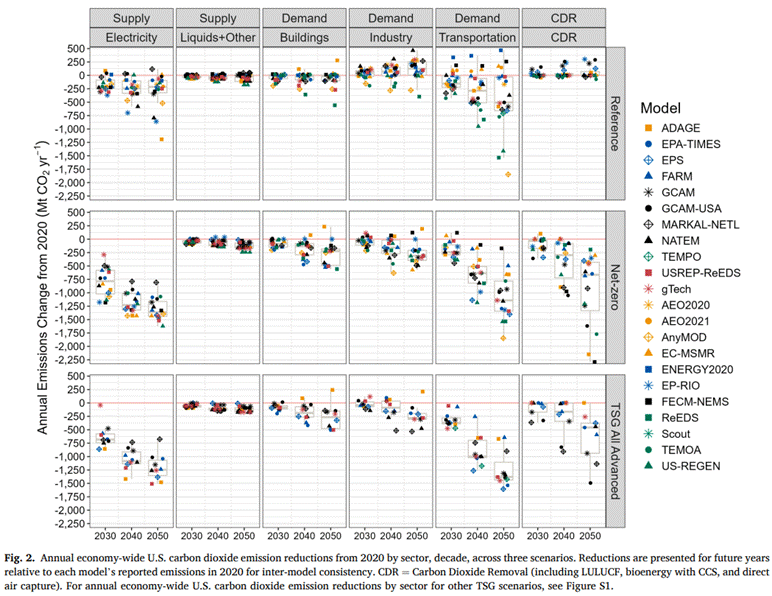
- Biofuels and hydrogen to play auxiliary yet critical roles
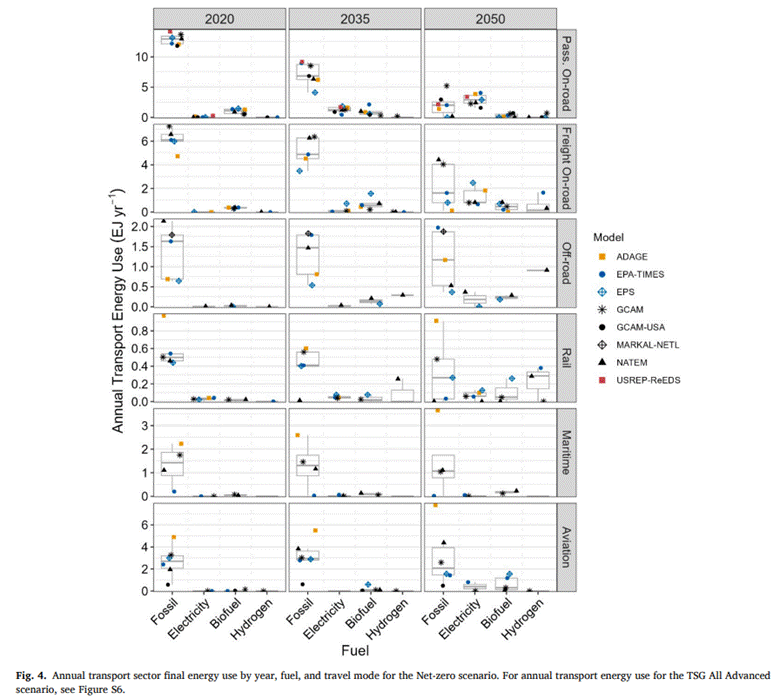
Heavy-duty trucks, aviation, and maritime transport cannot rely entirely on electricity, making biofuels and hydrogen important supplements. Particularly in aviation, sustainable aviation fuel (SAF) is regarded by most models as the primary decarbonization pathway.
- Residual emissions still dependent on carbon removal technologies
Nearly all models indicate that residual emissions will remain in the transportation sector by 2050, even with the adoption of the most advanced technology and policy combinations. Therefore, technologies such as bioenergy with carbon capture and storage (BECCS), direct air capture (DAC), and land use, land-use change, and forestry (LULUCF) will be indispensable for achieving “net zero”.
- Limited impact of behavioral shifts and modal transitions
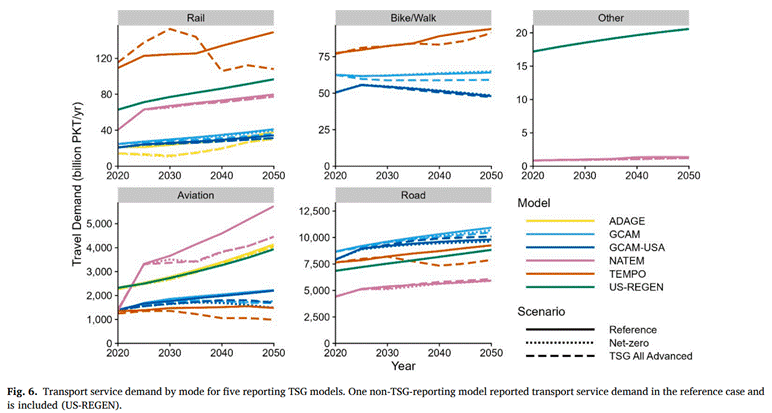
Despite long-standing academic calls to reduce transportation demand through public transit, non-motorized travel, and other means, most economic system models show that such behavioral changes contribute relatively little to national-level emission reduction. This may be related to the failure of model structures to fully capture micro-level behavioral changes and also reflects the current situation of the United States’ heavy reliance on private automobiles.
III. Inter-model Differences Reveal Significant Uncertainties
There are significant differences among models in terms of emission reduction magnitude, energy structure transformation, and particularly decarbonization pathways in aviation and maritime transport. For example:
In the “TSG All Advanced” scenario, projections for fossil fuel use in the transportation sector by 2050 range from 0.03 EJ to 15 EJ;
Projections for growth in aviation demand range from -30% to +68%, significantly impacting final emission results;
Hydrogen may play a larger role in railways and off-road machinery but is almost insignificant in passenger vehicles.
IV. Policy and Technical Recommendations
The article points out that no single policy or technology can achieve transportation decarbonization, and a multi-level strategy must be adopted:
- Strengthen policies to promote electric vehicles, including the construction of charging infrastructure, vehicle purchase incentives, and grid flexibility management;
- Accelerate research and development of hydrogen and biofuels and infrastructure deployment, especially for aviation, maritime transport, and heavy-duty trucks;
- Introduce carbon pricing mechanisms to increase the cost of fossil fuels and enhance the competitiveness of clean technologies;
- Strengthen coordinated planning between transportation and power systems to address the surge in electricity demand caused by electrification;
- Promote reforms in urban and transportation planning, encouraging transit-oriented development (TOD) and shared mobility models.
V. Author Institutions and Collaboration Background
The author team of this study includes several international authoritative institutions:
- National Renewable Energy Laboratory (NREL): A global leader in renewable energy technology and system modeling;
- U.S. Environmental Protection Agency (EPA): Responsible for U.S. greenhouse gas inventories and climate policy assessment;
- Pacific Northwest National Laboratory (PNNL): With profound accumulation in energy system and climate modeling;
- Electric Power Research Institute (EPRI): Long-term support for research on low-carbon transformation of the power sector;
- Stanford University: As the initiator of EMF, with extensive influence in energy-economic modeling;
- South China University of Technology (SCUT): Responsible for evaluating technology penetration and industrial policies in the U.S. passenger vehicle market and providing an international research perspective;
- HEC Montréal (Canada) and Korea Advanced Institute of Science and Technology (KAIST) contribute international perspectives and cross-regional modeling experience.
This cross-institutional, multi-model collaboration model enhances the robustness of the research conclusions and their reference value for policy-making.
Conclusion
The study not only clarifies the core position of transportation in achieving the U.S. net-zero goals but also reveals the limitations of current models in characterizing behavioral changes, emerging technologies, and cross-sector coupling. The authors call for strengthened policy intervention, technological innovation, and model improvement to address the arduous challenges of transportation decarbonization in the next three decades.
Drafted by: Shiqi Ou and Lanxin Shi
Final review by: Shiqi Ou